
Character Types Worksheets
Scholars use many different terms when they are discussing the characters in a story. A character can be a protagonist, or central character. That same protagonist can also be a dynamic character, or one who undergoes significant changes in the story. And scholars may also call that dynamic protagonist round or flat based on how well the narrator develops him or her. As you can see, there are many terms that you can use to discuss characters. Let's review them:
Antagonist: force that opposes the central character.
Static: a character that does not change significantly.
Dynamic: a character that changes significantly.
Round: a complicated character that has many sides and emotions.
Flat: a simple character that demonstrates few traits.
Got that? Here are some character type worksheets and PowerPoint lessons. I hope that these materials will help students master these concepts.
Looking for a newer digital option? I've created free character types lessons and activities at Ereading.ai. Students practice identifying protagonists, antagonists, round and flat characters, dynamic and static characters, and stock characters. These activities are fully digital and ready for Google Classroom!



Characterization
Common Core State Standards
RL.K.3 - With prompting and support, identify characters, settings, and major events in a story.
RL.1.3 - Describe characters, settings, and major events in a story, using key details.
RL.2.3 - Describe how characters in a story respond to major events and challenges.
RL.3.3 - Describe characters in a story (e.g., their traits, motivations, or feelings) and explain how their actions contribute to the sequence of events.
RL.4.3 - Describe in depth a character, setting, or event in a story or drama, drawing on specific details in the text (e.g., a character's thoughts, words, or actions).
RL.5.3 - Compare and contrast two or more characters, settings, or events in a story or drama, drawing on specific details in the text (e.g., how characters interact).
RL.6.3 - Describe how a particular story's or drama's plot unfolds in a series of episodes as well as how the characters respond or change as the plot moves toward a resolution.
RL.7.3 - Analyze how particular elements of a story or drama interact (e.g., how setting shapes the characters or plot).
RL.8.3 - Analyze how particular lines of dialogue or incidents in a story or drama propel the action, reveal aspects of a character, or provoke a decision.
RL.9-10.3 - Analyze how complex characters (e.g., those with multiple or conflicting motivations) develop over the course of a text, interact with other characters, and advance the plot or develop the theme.
RL.11-12.3 - Analyze the impact of the author's choices regarding how to develop and relate elements of a story or drama (e.g., where a story is set, how the action is ordered, how the characters are introduced and developed).
RL.1.7 - Use illustrations and details in a story to describe its characters, setting, or events.
RL.2.7 - Use information gained from the illustrations and words in a print or digital text to demonstrate understanding of its characters, setting, or plot.
Search here.
18 Comments
Leave a Reply
- Author's Purpose Worksheets
- Characterization Worksheets
- Conflict Worksheets
- Fact and Opinion Worksheets
- Figurative Language Activities
- Figurative Language Poems with Questions
- Genre Activities
- Irony Worksheets
- Making Predictions
- Mood Worksheets
- Nonfiction Passages and Functional Texts
- Parts of Speech Worksheets
- Poetic Devices
- Point of View Worksheets
- School Project Ideas
- Setting Worksheets
- Simile and Metaphor Worksheets
- Story Structure Worksheets
- Text Structure Worksheets
- Theme Worksheets
- Tone Worksheets
- ALL PAGES AND WORKSHEETS
Mr. Morton
/ May 19, 2021Some people were concerned with some of the language used in these stories. I have attempted to make it more accessible to everyone by making minor changes to the content. The language used is more sensitive to the concerns raised.
I made these changes while creating some online versions of these stories/activities.
It was a good time to update the content.
Thank you for visiting, everyone!
Diego Soto
/ March 23, 2021This is a great PPT, I am so happy that finally someone took the time to elaborate some class activities related to this topic.
Btw, I’m a “Latino” English teacher and I don’t find it offensive nor stereotypical in any way.
Thank you for sharing your information.
Dayana Gordillo
/ March 7, 2021Thank you so much!! You have amazing resources.
Brooke
/ February 4, 2020I love all of your resources. I find them extremely useful in the classroom. I find some of these comments regarding people being offended offensive to me. Can you please change the name of those commenting? Steve, Jay and Cap are highly offensive and stereotypical. I had to take a break after reading these comments to cry in my safe space.
Sincerely,
A middle school teacher that is focused on student success and not becoming liberal cry babies.
JECEL MONTI-EL
/ January 27, 2020THIS IS A BIG HELP TO MY PUPILS!
JECEL MONTI-EL
/ January 27, 2020WONDERFUL!
Cap
/ April 1, 2019Wow, other things to do? More important than eliminating prejudicial stereotypes?
Mr. Morton
/ April 1, 2019I try to create stories that include characters with a variety of names, rather than just Alice and Bob.
This is an attempt to be more inclusive. In some of the stories, characters with more “ethnic” names are heroic. In other stories they are more villainous.
If you are arguing that there is something wrong with this, please explain.
Furthermore, you are merely inferring that these characters are of a certain race. Those inferences live in your head and have no provable, objective reality. Perhaps you need to question your own conclusions rather than lunging at my content?
Also, remember that this is free content that is open for classroom use. I can never make everyone happy, but if you know the changes that will make you happy, feel free to download the RTF files and change it.
Thanks for visiting!
jay
/ October 23, 2017Character names in both stories seem to reinforce negative stereotypes.
Mr. Morton
/ October 23, 2017They do? Can you explain?
jay
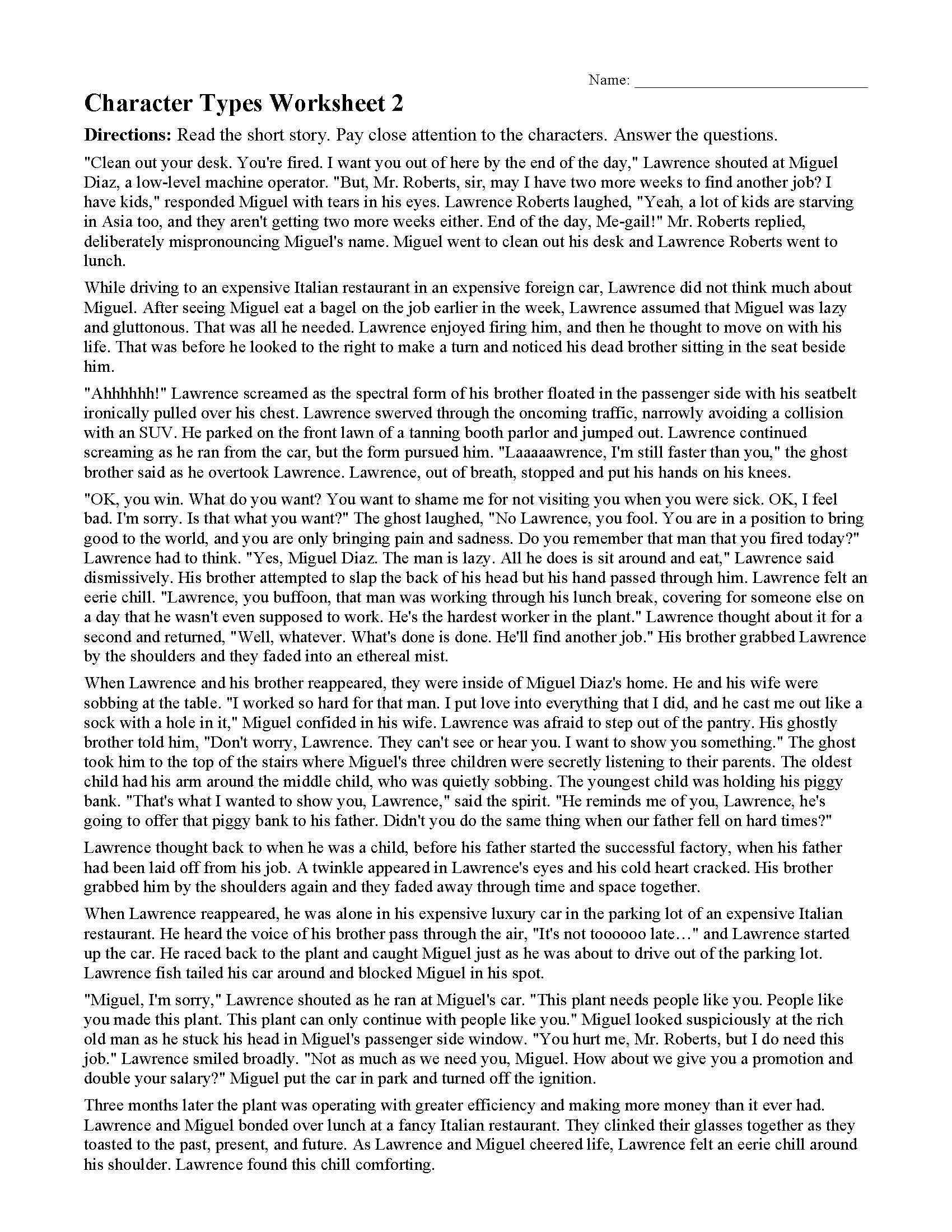
/ October 24, 2017Jawanna is an obvious African American name and is a bully.
Miguel Diaz, obviously Hispanic or Latino, is describe as a low-level machine operator.
Mr. Morton
/ October 24, 2017I see. Thank you for your observations and comments. I will consider them in my future writing.
Steve
/ February 26, 2019Why don’t you change them now. They are offensive and it leads one to think that was the intent.
Mr. Morton
/ March 6, 2019I invite you to download the .RTF files and change them to meet your standards of decency. I have other things to do at this time. Best wishes, friend.
Sherry
/ March 17, 2021Unfortunately, I read these with my first hour class without proofreading it. I was shocked. I thought it must be an unfortunate happenstance, so I downloaded ws 2. OMG it got worse! The hispanic low level worker coupled with the starving kids in Asia comment…it’s not a coincidence. Thankfully, I saw the author’s comment on editing and fixed the first one. I genuinely hope the teachers that use these and choose to play dumb are called out by parents over their ignorance.
amiyah
/ March 10, 2017that game is so much fun
antonio
/ October 3, 2016i love this site, because it helps me with my ELA work and home work.
anonymous
/ November 13, 2018boi. you need to actually do ur hw!